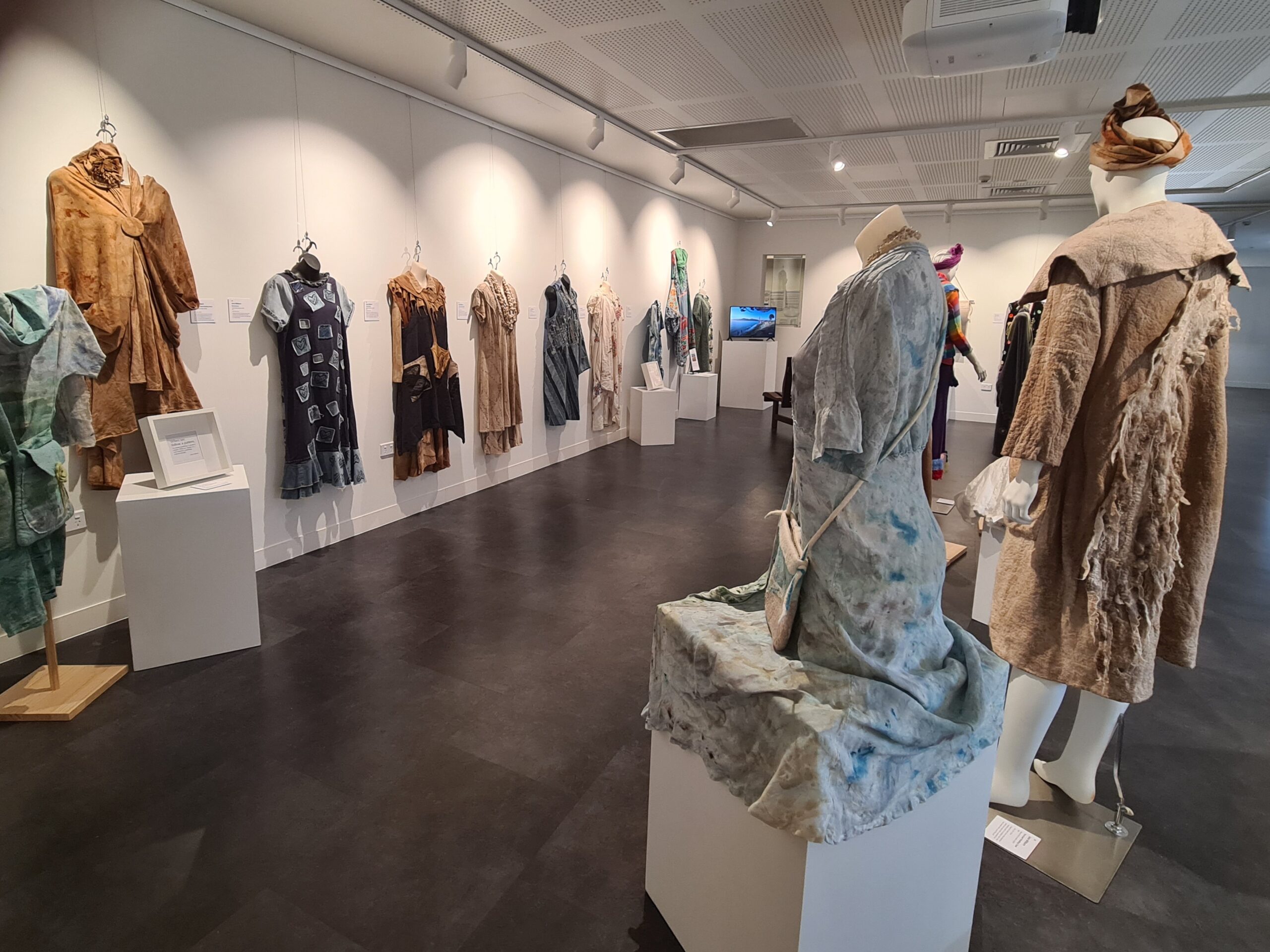
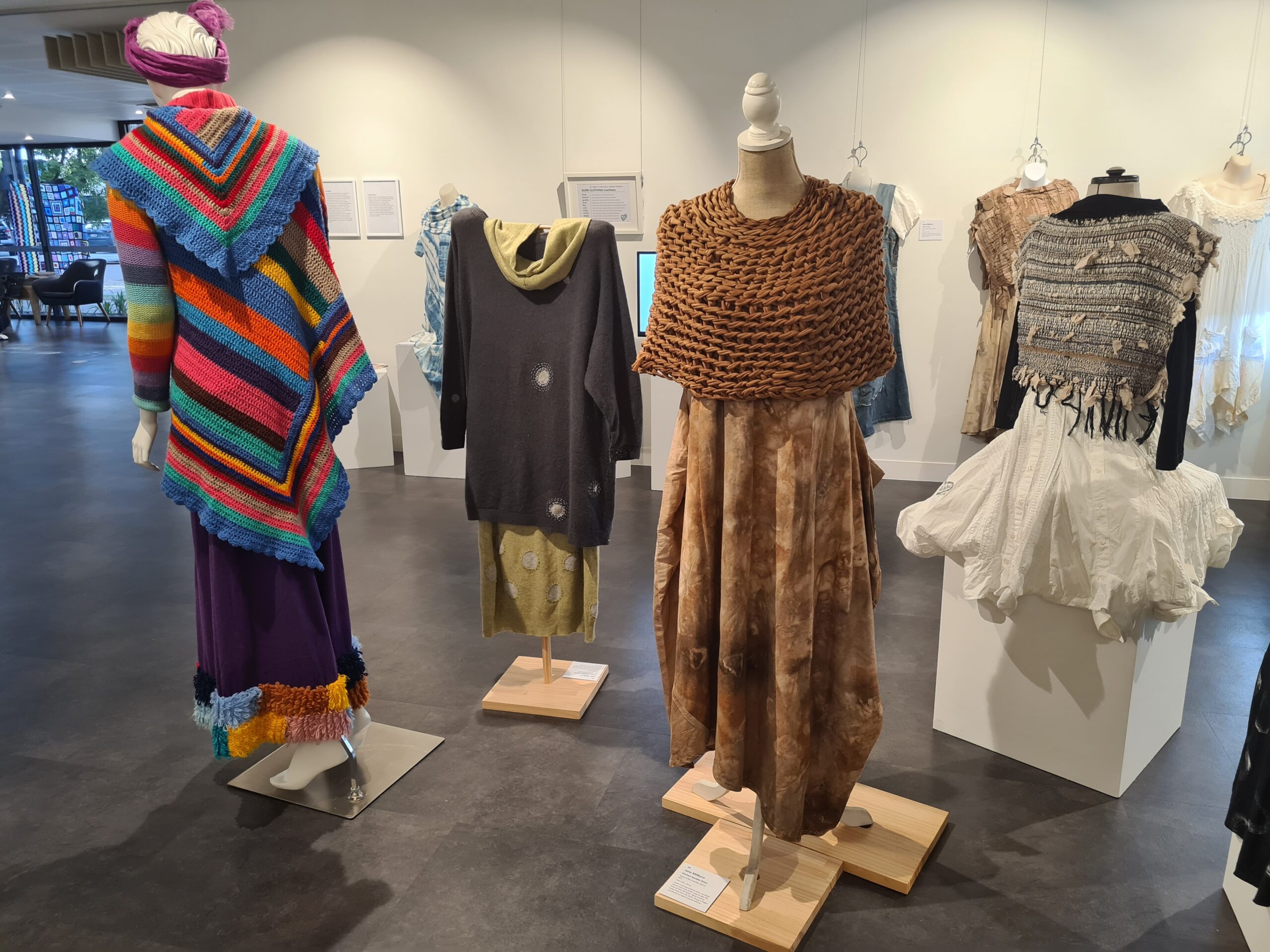
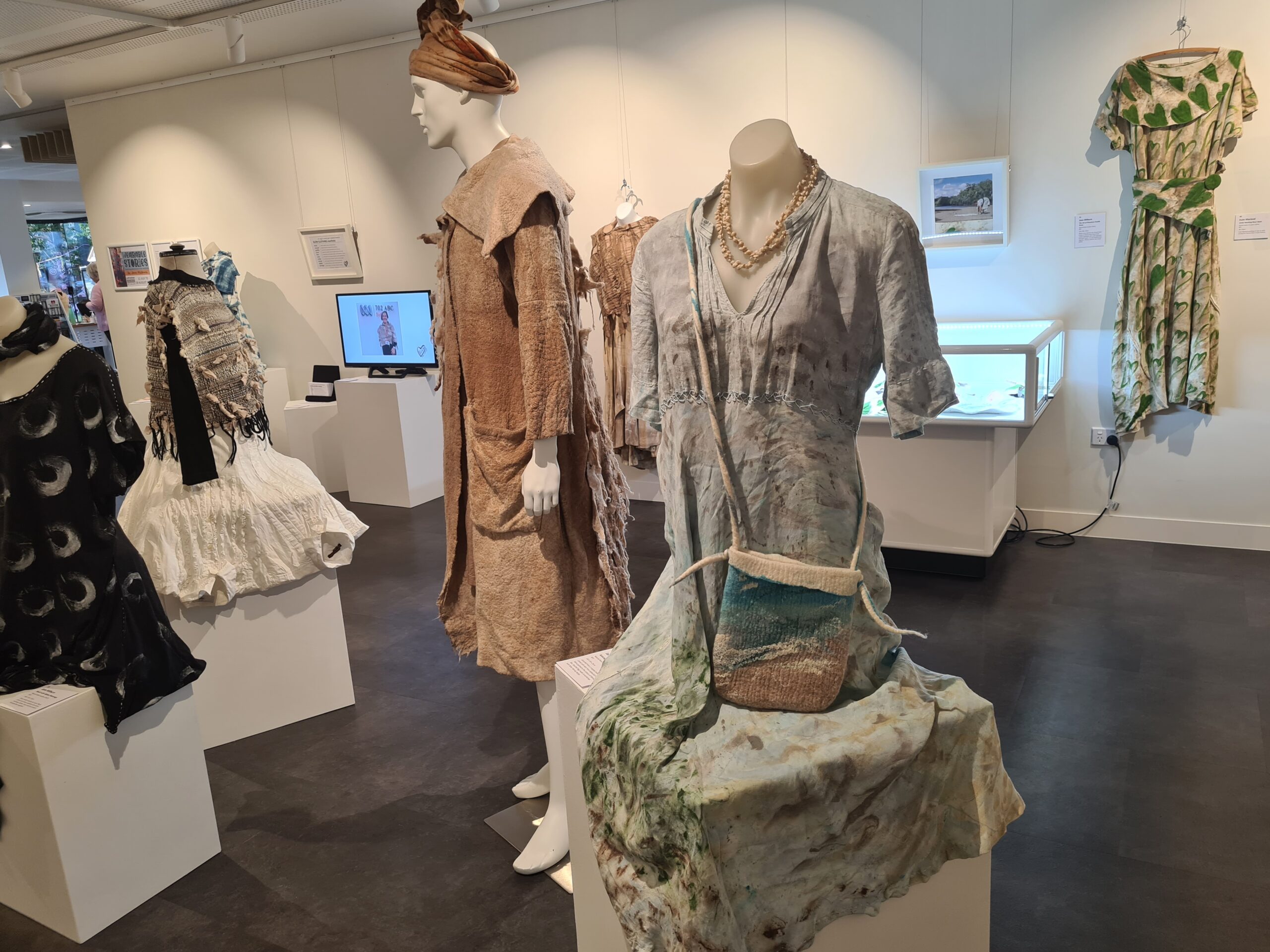
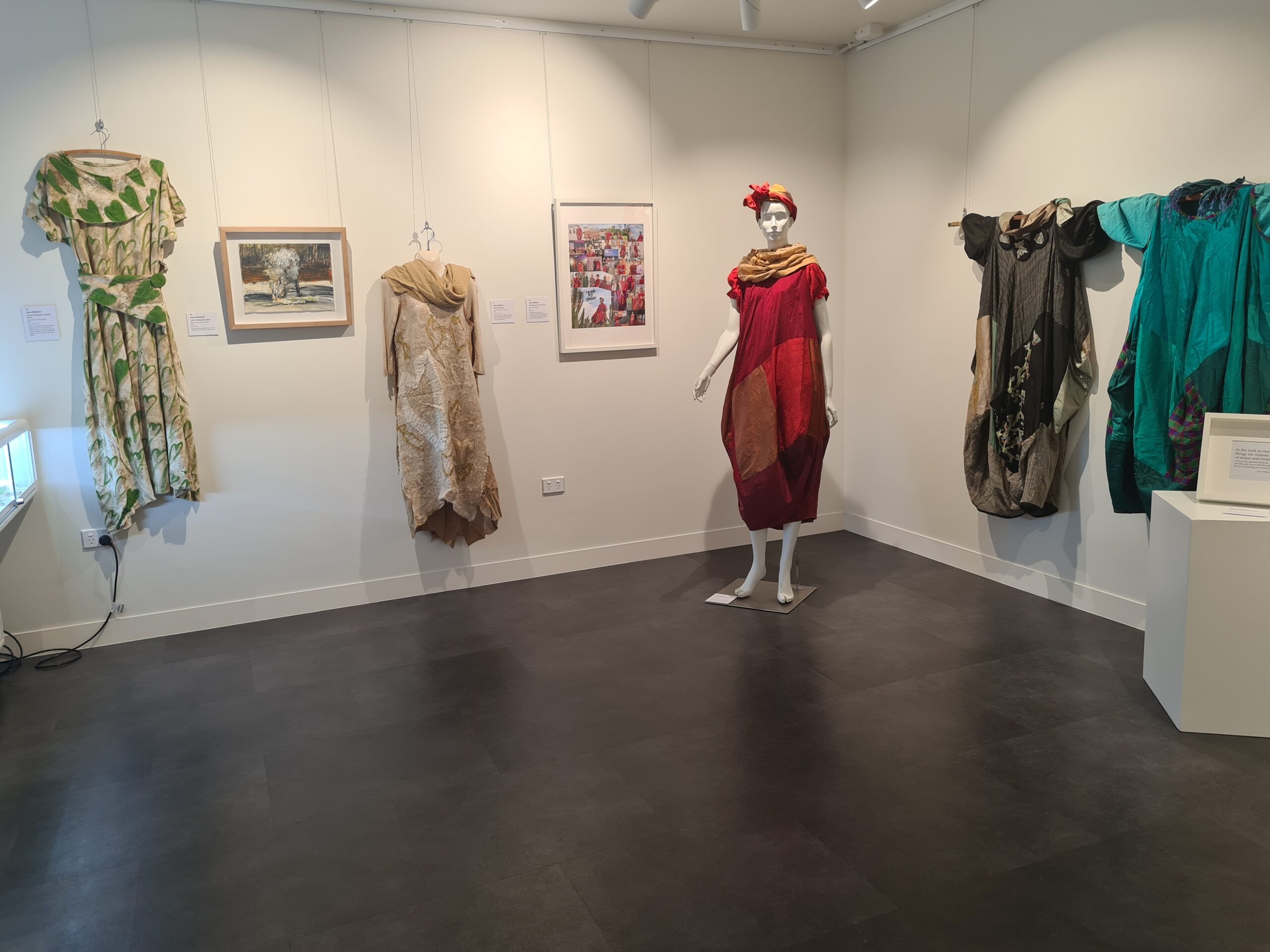
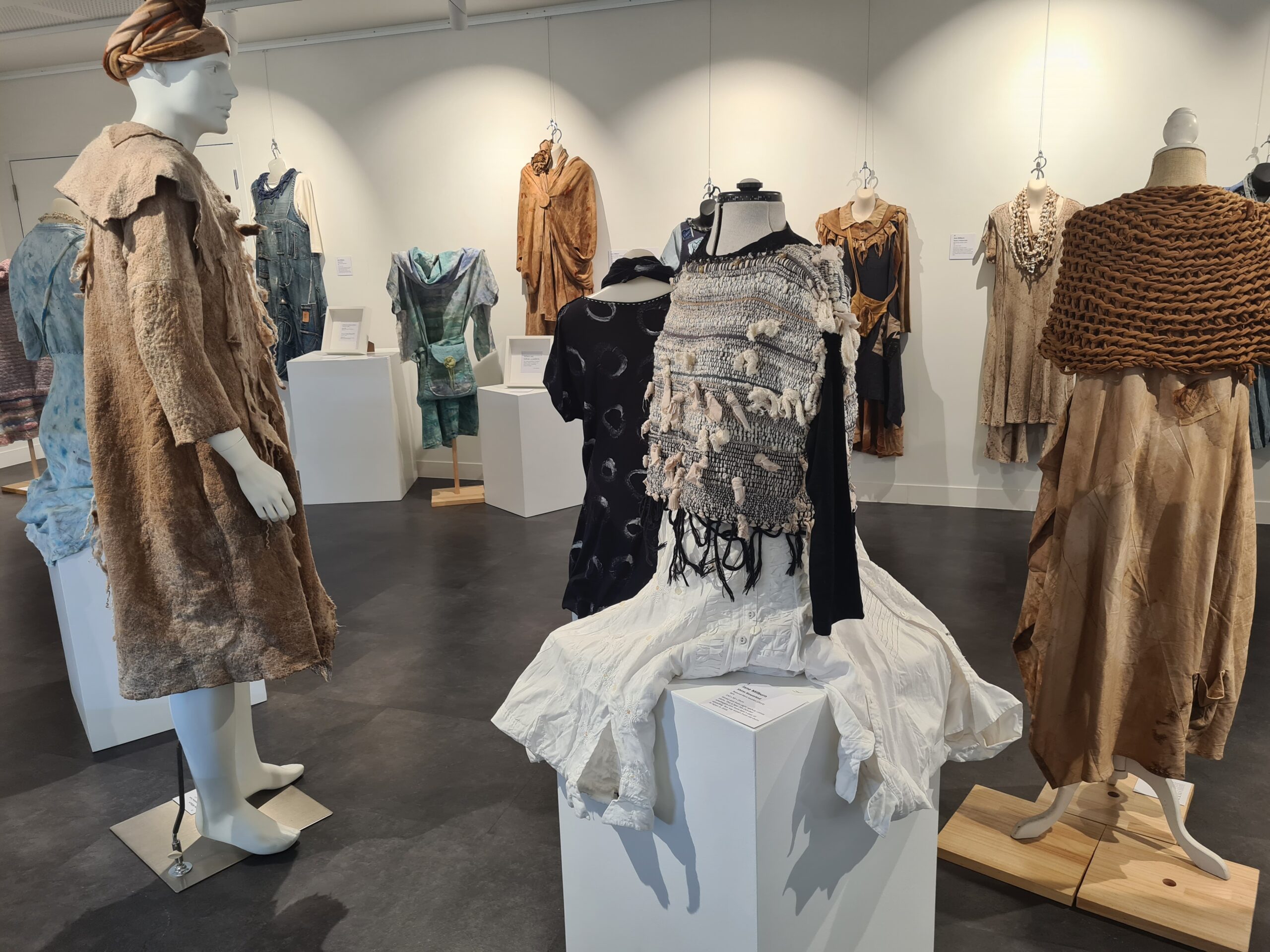
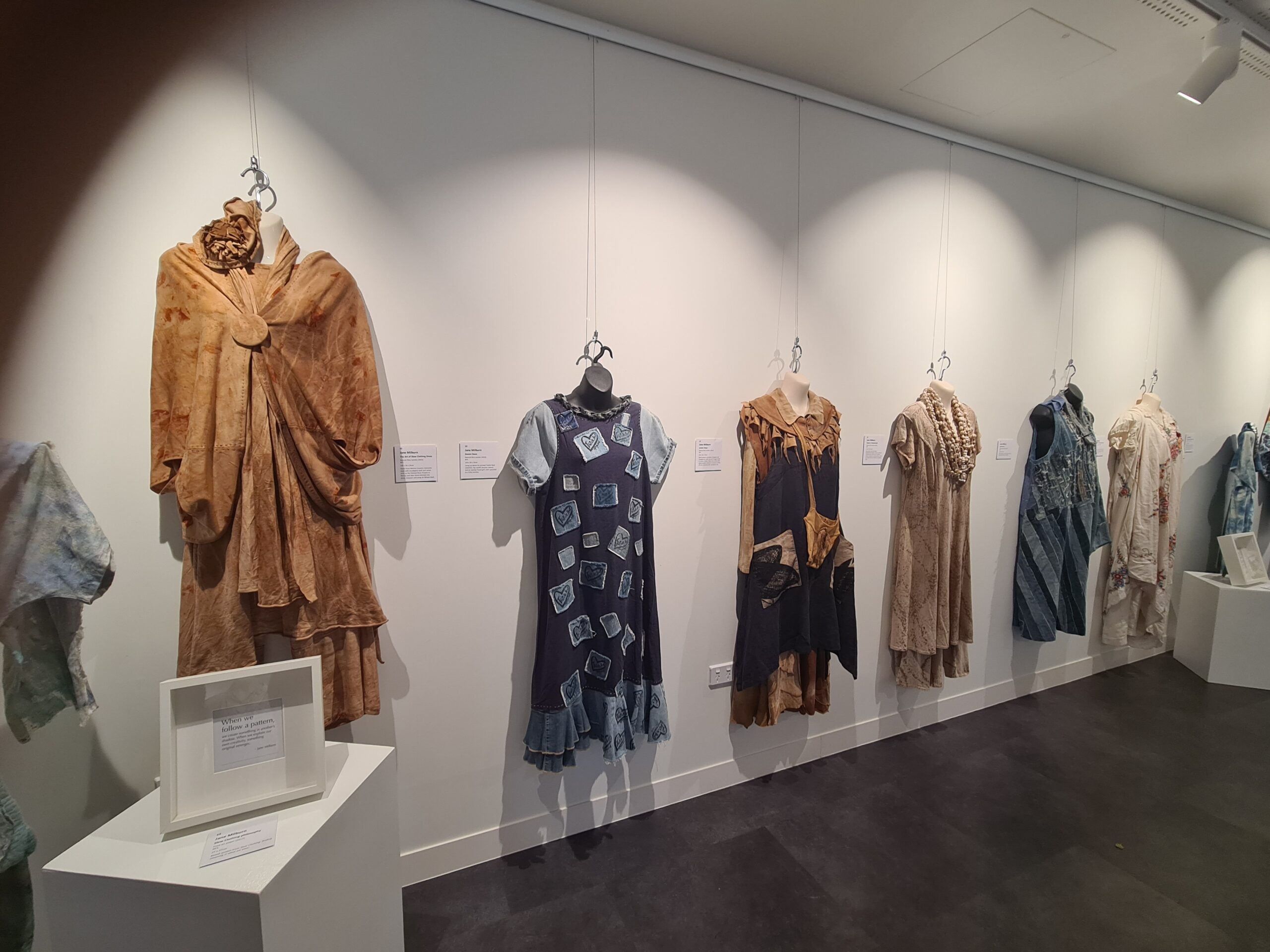
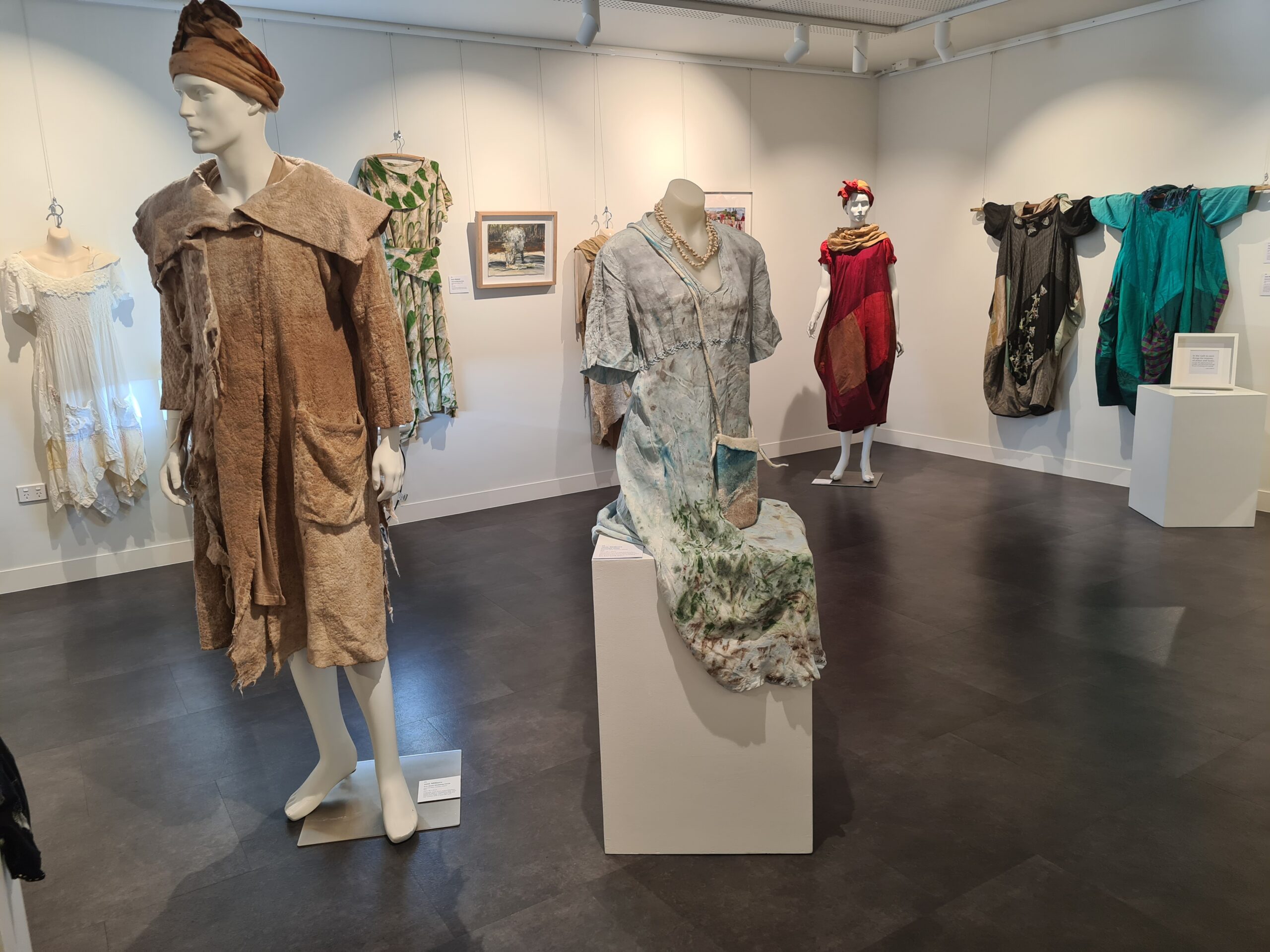
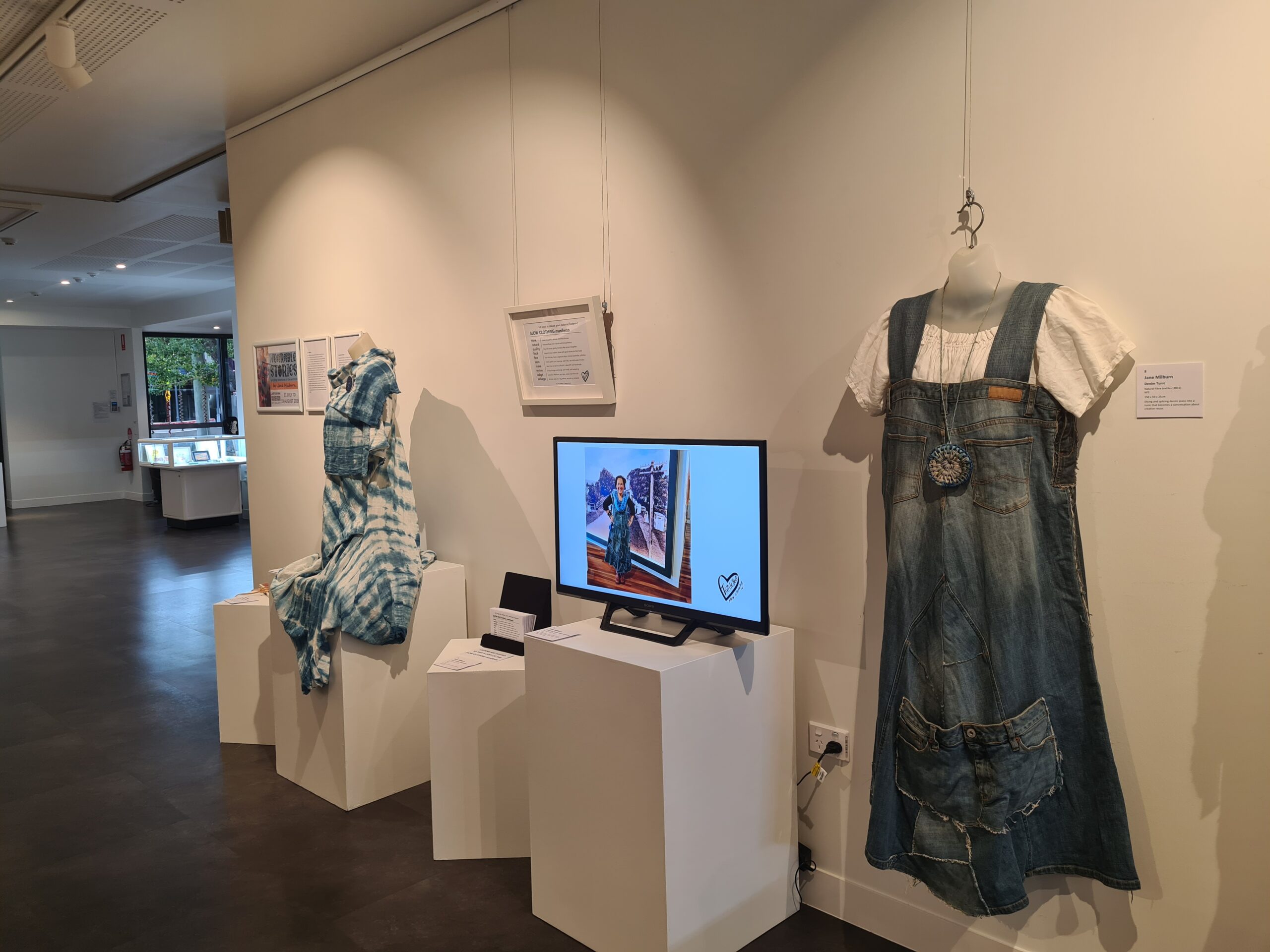
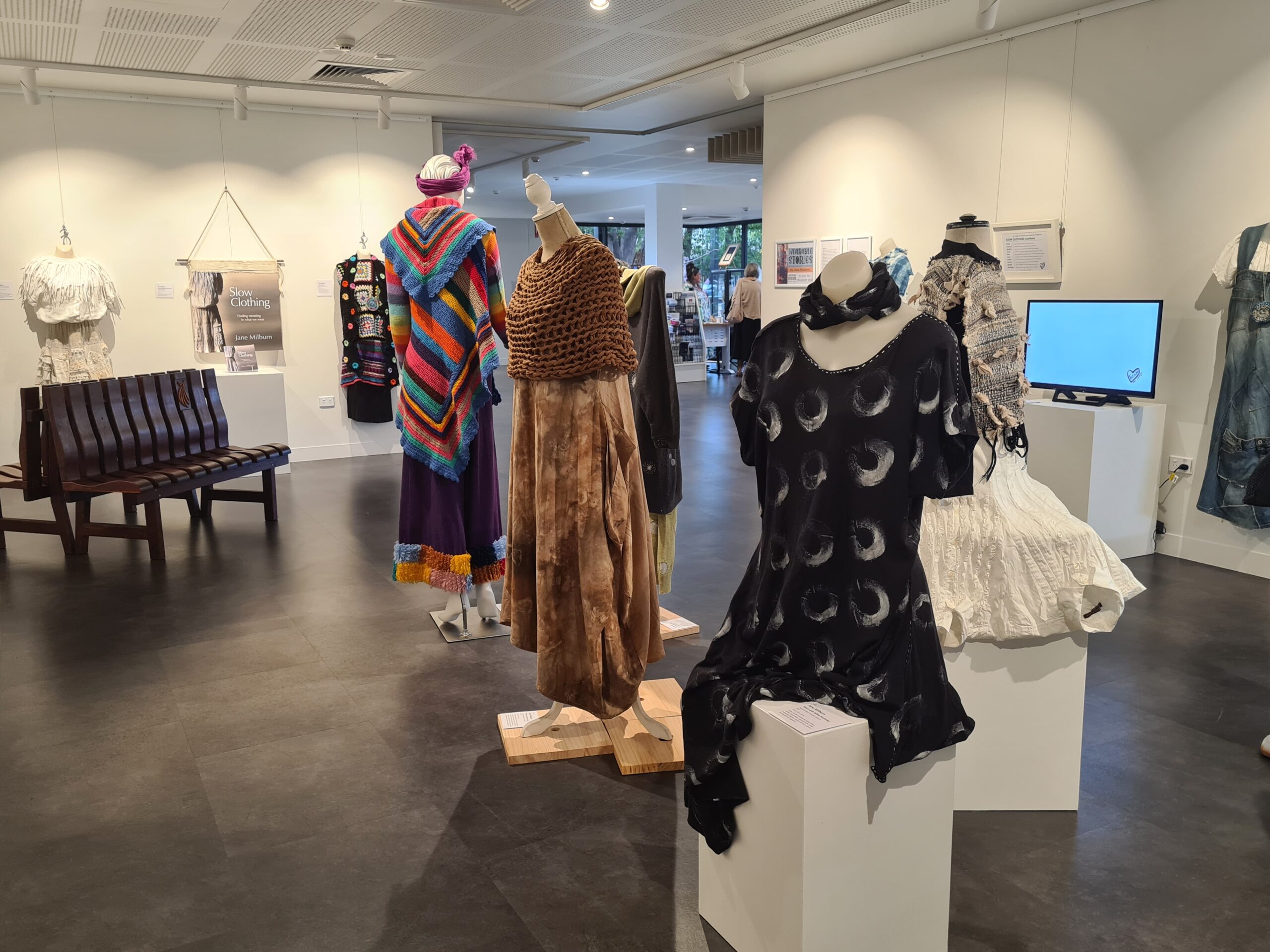
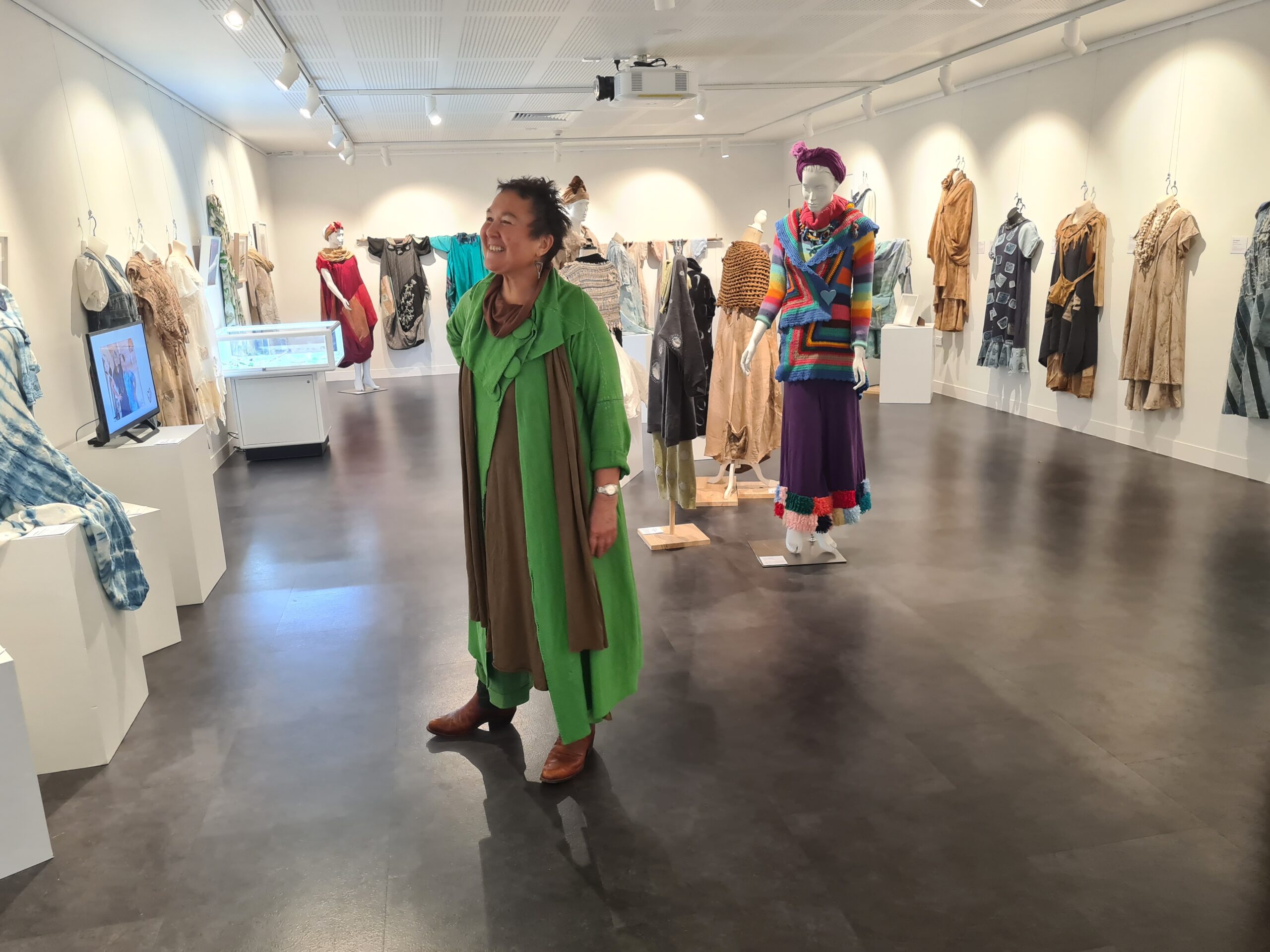
The Wearable Stories: upcycling adventures in the wardrobe exhibition brings together 15 years of action-based leadership by Jane Milburn and Textile Beat to celebrate the actions of rewearing and upcycling clothes as a proactive response to consumerism and textile waste. In addition to 32 upcycled creations, there is a Timeline of Jane’s actions and a little statement called First with the News which shows how the data crunched by Jane in 2016 was used far and wide, including at a Federal Parliamentary Inquiry in 2019.
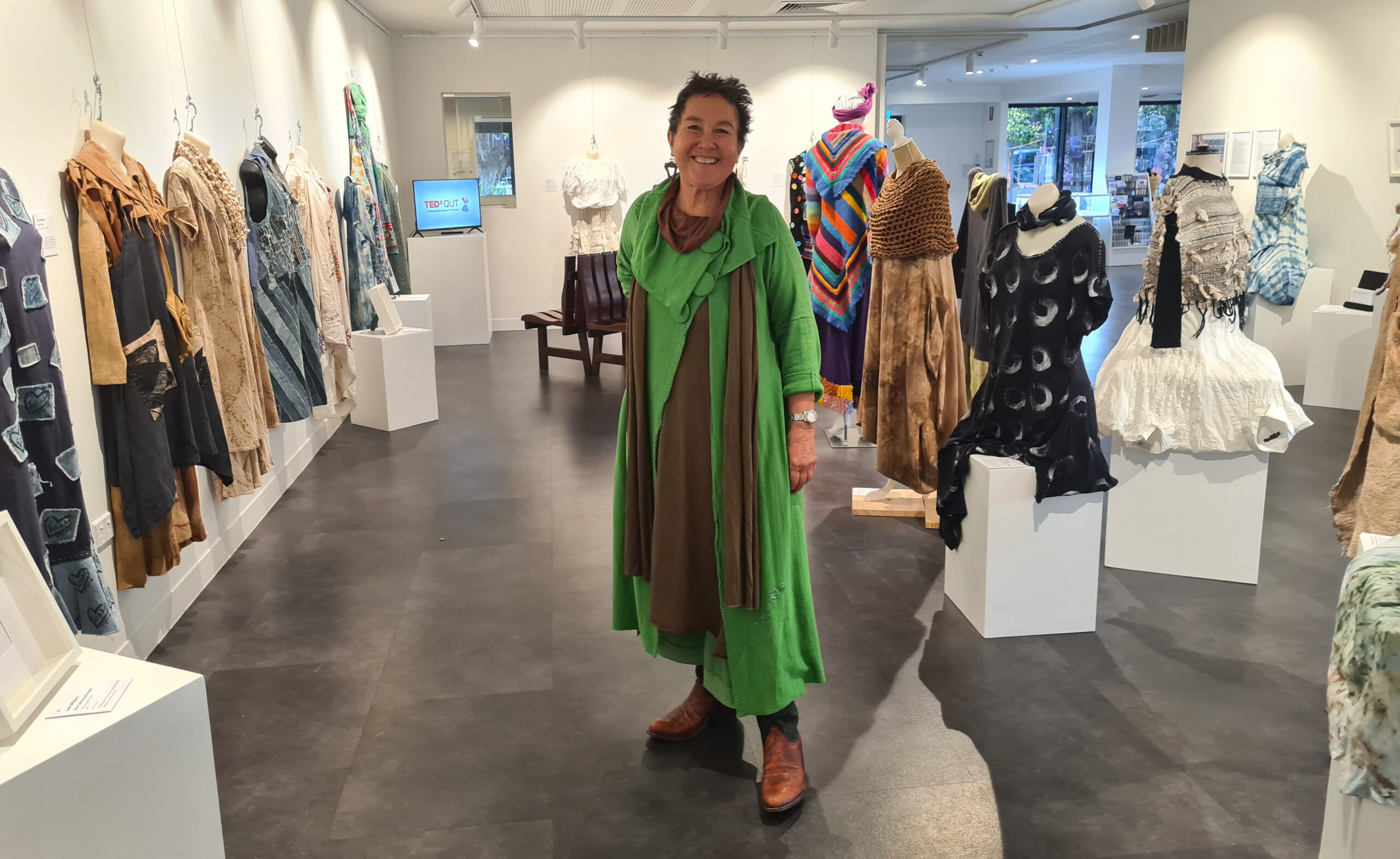
The purpose of Wearable Stories is to shine light on creative meaningful ways of dressing that don’t involve buying and tossing to the point where annually 220,000 tonnes of clothing is ending up in Australian landfills. The average Australian buys 56 new items of clothing each year.
Since noticing the problem in 2011, Jane set up Textile Beat to raise awareness about ways to reduce our material footprint through responsible choices and actions: think more, choose natural fibres, buy quality, local and not too many clothes, take care of what you have, and learn to make, revive, adapt and salvage.
She said while some commendable progress has been made in commercial recycling options, these do not address the elephant in the room which is the sheer volume of production and consumption which has accelerated with online shopping options.
The Wearable Stories exhibition – which encompasses Jane’s Churchill Fellowship findings and her book Slow Clothing: finding meaning in what we wear – aims to inspire wearers to think differently about their clothes and cultivate individual, independent style that brings empowerment, saves money and reduces waste.
In opening the exhibition, storyteller extraordinaire Cathie Schnitzerling said: “Since reading Jane’s Slow Clothing book and interviewing her for ABC radio years ago, I have become more conscious of what I buy, what it’s made of and where I buy it. Jane’s commitment to raising our consciousness about choosing quality, natural-fibre clothing that can be worn again and again, repaired or reinvented, is second to none.”
The Wearable Stories exhibition is at Lapunya Art Gallery in Chinchilla from July 11 until August 19. The 32 garments and accessories in the exhibition are all made from natural materials, unlike two-thirds of new clothes that are now made from synthetic fibres such as polyester and acrylic, derived from petroleum and shedding microplastic into our ecosystem.
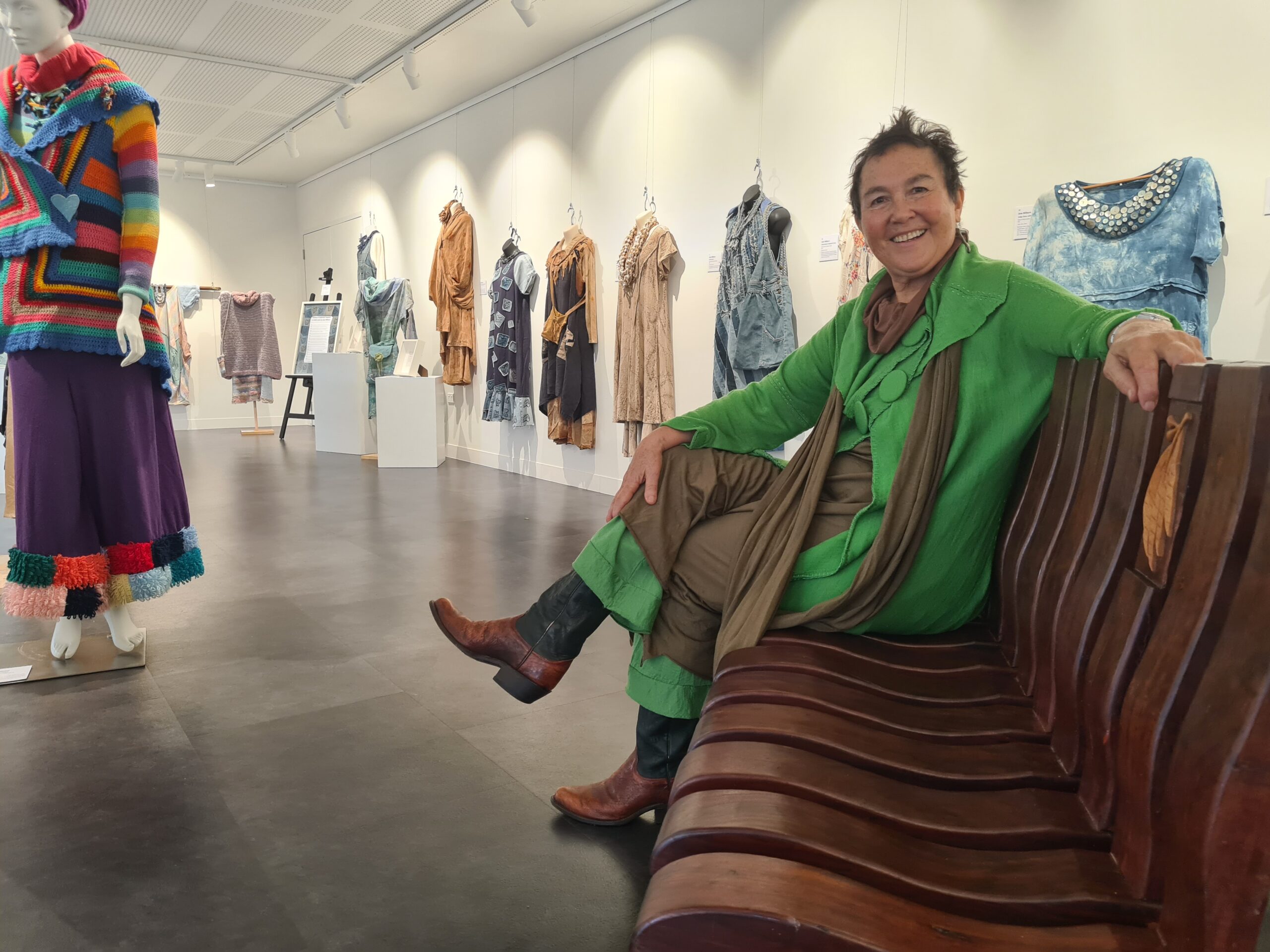
What did Jane wear for the opening? “This ensemble travelled the world with me on my Churchill Fellowship because I needed easy-care clothes. It was made with merino meterage bought from The Fabric Store which sells end-of-roll materials so that fits with my slow clothing ethos. It is mended from where my trolley ran over it and held together by old badges that I re-covered. The jacket is made entirely with hand-stitch. I made up the patterns to suit my own style, and the Eco-dyed Wadding Cloak in the exhibition was my prototype.“
See more photos below and listen to Jane’s interview with ABC Radio Southern Queensland’s David Illife