Adapting and ARISING


As public health authorities and governments scramble to manage the coronavirus pandemic, we humans are sheltering in place, being called upon to stay home, be responsible, resourceful and resilient. The pandemic is profoundly changing the way we live and work, how we consume resources and entertain ourselves – and having dramatic economic, social and cultural impacts. I hope you’re keep safe, sheltering at home, in place, grateful to those on the frontline are doing battle with this threat.

Earlier this month, my long-planned Winston Churchill Fellowship study tour to Japan, the United States, the United Kingdom and Europe was deferred for an indefinite period. I’ve been gardening, upcycling and innovating – and now planning a Virtual Churchill as a short-term substitute for my real-world one. ARISING from Disruption is an emerging series of conversations with entrepreneurial people about self-sufficiency, resourcefulness and adaptation at this time for transformative change. I hope you find some seeds of inspiration and hope from their stories.

Small individual actions can, and do, create big changes. About 10 percent of our carbon footprint is embedded in the clothes we wear therefore our choices matter. Since 2013, Jane Milburn has been raising awareness about ways to reduce our material footprint through slow clothing actions: think, choose natural, quality, local, have few, care for what you have, make your own, revive, upcycle and salvage. In this news report, ABC journalist Lucy MacDonald outlined three ways for dress sustainably: buy sustainable fibres, choose pre-loved, and shop your wardrobe. She chatted with Jane about upcycling and reskilling so we can get more life out of what we aready own.
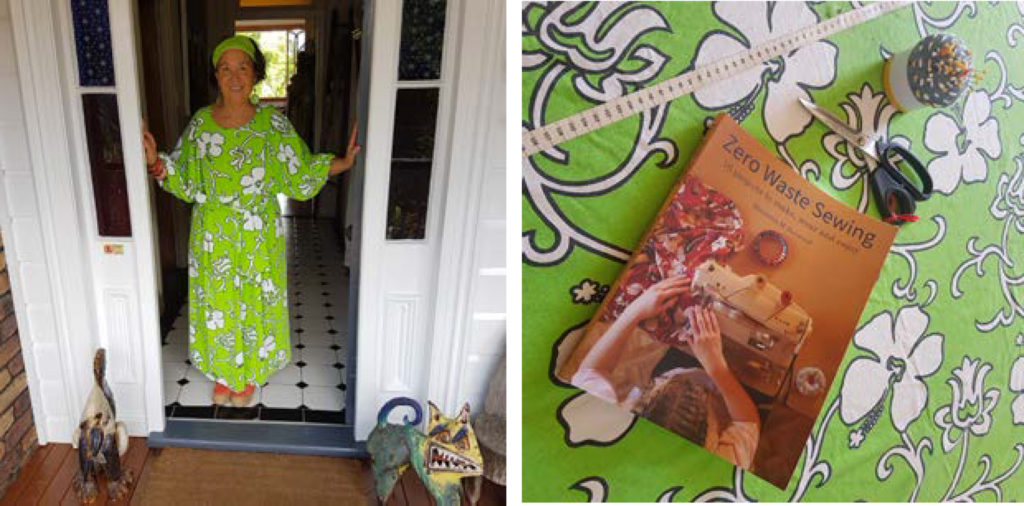
Sewing in straight lines and basic math skills are all that’s required to achieve success with the simplest of the handmade clothing projects in a clever new book Zero Waste Sewing from South Australia’s Elizabeth Haywood.
Zero Waste Sewing is a practical and resourceful book based around 16 projects to make, wear and enjoy, with plenty of opportunity to modify and adapt them to suit your shape and preferences.
Through her ingenious patterns, Liz inspires a sustainable, resourceful approach by showing us how to use 100 per cent of the fabric, with nothing left over. Such a great goal to work towards!
The Craft of Clothes is Liz’s blog about sewing and fashion, and her earlier book The Dressmakers Companion, reflect her background and experience as a pattern maker and sewing teacher.


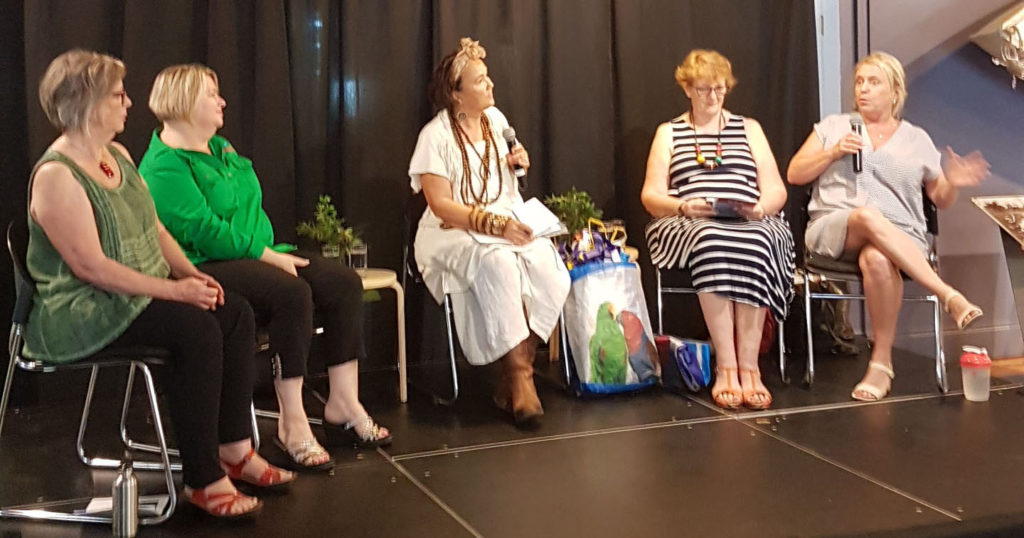
Jenni Guse, Tash Johnston, author Jane Milburn, Flora Bradley and Amanda Schultz talk local farming
On the Textile Beat enews December 2019 is in your inbox now if you’re subscribed, or you can read here or register on the right hand side of this website.
There’s been so much change in the past decade, it is exciting to think about what the next decade might bring. This time 10 years ago, I was on a journey of self-awareness with the Australian Rural Leadership Program. A pivotal decision to stop drinking alcohol (after having early stage breast cancer) enabled me to focus energy in a creative and purposeful way. Through Textile Beat, my background, interests, skills, experience and knowledge have come together to influence change and create awareness of more sustainable ways of dressing (Here’s one of my early Stitch in Time columns). Since 2013, I’ve had nearly 600 engagements around Australia spreading ideas for reducing our material footprint and have seen so much change in that time. I’ve been awarded a Churchill Fellowship based on that work which enables me to travel to Japan, the United States, the United Kingdom and Europe next year to investigate ways that upcycling/mending can help reduce our textile waste and enhance wellbeing. Wishing you and me well for our next decade of life.
By Jane Milburn *
Sowing or sewing? If you are a gardener or a sewist, you reap what you sow or sew. While there are many gardeners among us growing some food, there are fewer sewists making their own clothes.
In the same way many are sowing seeds to yield nutritious home-grown, local, natural food, it is time to invest energy in sewing local natural clothes.
With global supply chains pumping out 80 billion garments each year, most people have lost sight of where and how things are made, and what from. Slavery combined with increasing use of synthetic/plastic fibres, has led many to buy two to four times what we used to, resulting in waste and pollution, and a loss of skills and knowledge about clothes.
Over the past two decades, globalisation and production efficiencies have meant it is cheaper to buy clothes than make them. We’ve got used to affordable, ever-changing styles. Shopping is addictive and we’re encouraged to buy quantity over quality for the good of the economy. It is only when we stop and think about why clothes are so cheap that we come to understand they are not properly costed, that exploitation of people and resources exists in the system.
Each of us influences the future of the fashion industry through our buying choices. Surely the beginning of a new decade is a great time to turn over a new leaf. Let’s think about fewer clothes of better quality that we wear for longer.
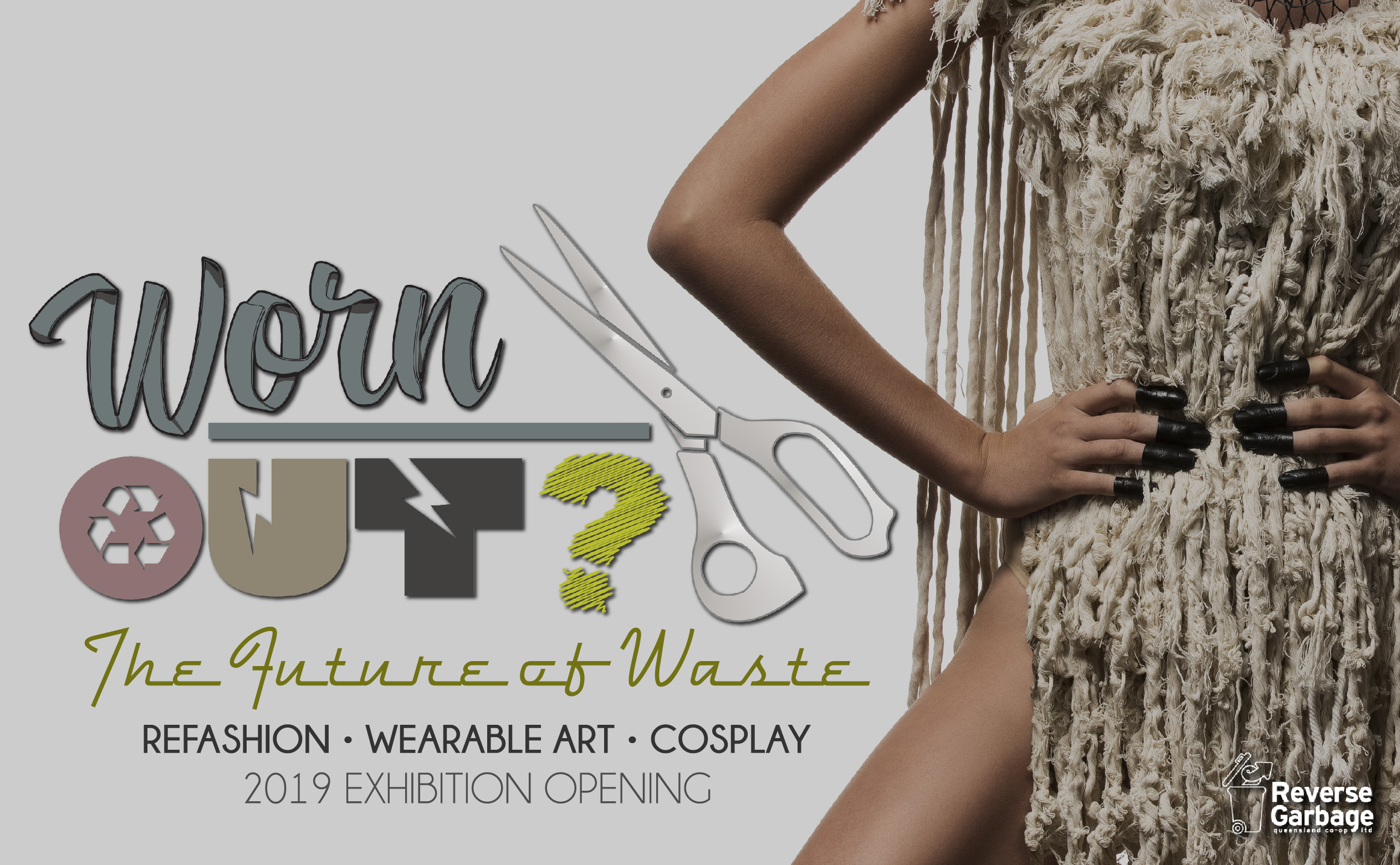
WornOut is an annual showcase of creativity and resourcefulness organised by Reverse Garbage Queensland to showcase designers working to reduce textile waste, with the 2019 theme being The Future of Waste.
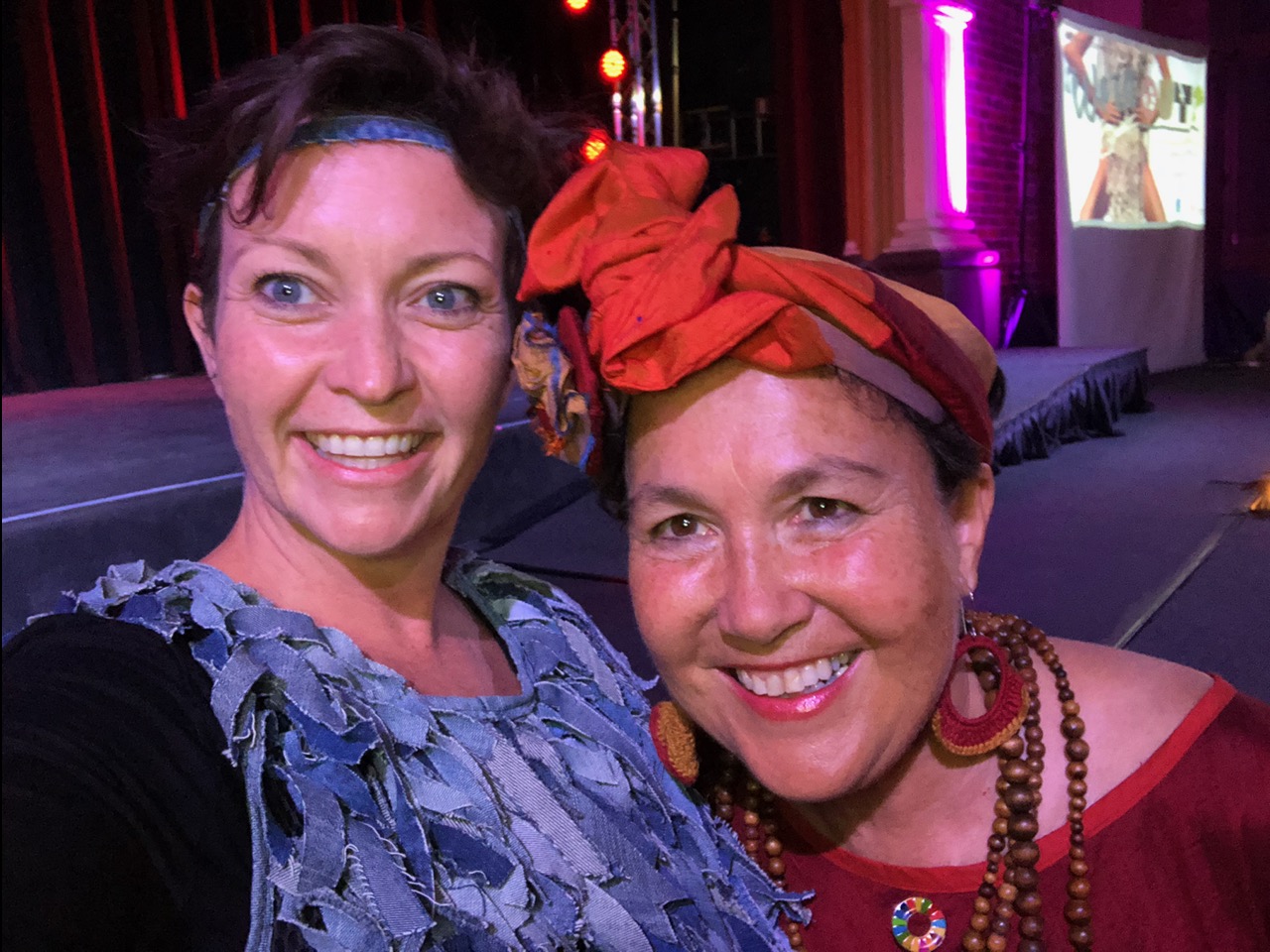
As ambassador, Jane Milburn said that future really must be for us to waste nothing – and invest creative effort to keep materials endlessly circulating. Jane and ABC Brisbane’s Rebecca Levingston co-hosted this year’s event.
‘There has never been a more important time to change our thinking and actions around reuse – to fully value and appreciate our planet’s precious resources,’ Jane said.
WornOut is now in its third year and taps into the global awakening about social and ecological impacts of the fashion industry, which contributes up to 10 percent of humanity’s carbon emissions. It is curated by Elizabeth Kingston, supported Brisbane City Council and the Queensland Department of Environment and Science, and was held on November 23 at Princess Theatre with showcases of refashion, wearable art and cos play.
Jane said the purpose of the WornOut showcase is to:
We live in a throwaway society, with an increasing amount of textiles used in the fashion industry made from synthetic fibres and garments produced using underpaid labour. Jane Milburn has a passion for natural fibres and believes behaviour change is needed towards dressing more responsibly, wearing clothes for longer and limiting the amount of textile waste thrown into landfill each year.
Using her campaigning and making skills, Jane created Textile Beat in 2013 and developed a 10-point Slow Clothing Manifesto of ways to reduce our material footprint. During the past six years, Jane has advocated for change across Australia through more than 560 engagements.